


【3D Printing】Interview with MaKim – Design First, Technology Second
How MaKim Became One of MakerWorld's Top Creators
From the curious tinkering of a hobbyist, Matthew Kimbrough forged his distinctive 3D designs. He never imagined that sharing his creations would bring joy to others, and this delight became the biggest surprise on his creative journey.

How MaKim Became One of MakerWorld's Top Creators
From the curious tinkering of a hobbyist, Matthew Kimbrough forged his distinctive 3D designs. He never imagined that sharing his creations would bring joy to others, and this delight became the biggest surprise on his creative journey.
In the world of amateur 3D printing, you often encounter two types of people.
The first type are the seasoned "veterans." They know what a MakerBot Cupcake is, remember Brook Drumm's name, and once used loose coils of filament that had to be manually wound onto a spool.
They'll sigh nostalgically, recalling how they had to manually level the bed with an Allen wrench while the printer was running. Then they'll laugh, remembering a time when a thermistor slipped out of the hotend, and they watched, horrified, as PLA boiled at 380°C.
The second type are the newcomers who joined relatively recently. They simply view 3D printers as a tool to bring their ideas to life. They'll offer polite smiles as the veterans recount these "legendary stories" of early 3D printing, but for them, these tales are more like irrelevant anecdotes.
For them, a 3D printer is just a tool – a tool to create projects that were unimaginable 10 or 15 years ago.
Matthew Kimbrough, better known as MaKim on MakerWorld, belongs to this second group.

Although he’s had a 3D printer for several years, he only fully committed in mid-2024. He used his nights, his weekends. There was no plan, no strategy, and he never thought anyone would see what he designed.
Now, less than two years later, his models are on shelves in homes around the world.
Parents print his Minecraft swords for their kids at Christmas and call them "the best gift ever."
Designers in Germany print his "remake projects" and photograph them alongside the original products they designed.
Matthew is not a professional CAD designer or a 3D printer operator. He has another full-time job, a family, and his life revolves around much more than just 3D printing.
Yet, almost by accident, he has become one of MakerWorld's most prominent designers, accumulating a collection of classic designs and successfully launching a crowdfunding project.
All of this happened in roughly twenty months, perhaps even less. Incredible? Just like his designs…
| Before the first print
Before we start talking about 3D printing, you need to understand one thing about Matthew's background – he comes from a family of "makers." This is not a metaphor, it's absolutely true.
His father was a shop teacher, teaching kids how to build things with their hands his entire life. And it goes back many generations. There seems to be a desire flowing through the family's bloodline: to touch materials with their own hands and transform them into completely different objects.

Matthew didn’t follow the woodworking path, but he chose graphic design.
His career began as a graphic designer, but he never stopped exploring new projects. Arduino, weather balloons for high-altitude photography, electronics, small video games he made on his own – these all became his interests. His notebooks and computer files are filled with long lists of inspirations.
The habit of "always writing things down" is crucial. Matthew has always kept records:
| I think we all have a long list of ideas in our heads—at least I do. My files and notebooks are full of them. And 3D modeling is a great way to turn some of those ideas into physical objects that people can print themselves. The most surprising part for me is that when I started modeling about a year and a half ago, I had no intention of publishing or sharing anything. So, when I see people printing my designs, even giving them as gifts—that joy is completely unexpected.
But before all that happened, it started with that Ender 3.
| After one printer…
The story of the Ender 3 is almost a shared memory for anyone who entered the world of 3D printing a few years ago.
In the late 2010s, Matthew stumbled upon an article: someone had used medical imaging software to convert an MRI scan of a brain into a mesh model, intending to print it at actual size. The idea deeply fascinated him. He bought an Ender 3. But in the end, he never managed to print that model…
| At that time, no one I knew had a 3D printer. I thought, wouldn't it be cool if I could print that brain at actual size? But because I couldn't find anyone to help me print it, and online printing services were quite expensive—especially for such a large object—I ended up buying one myself. Ironically, I never succeeded in printing it.
Ultimately, he temporarily stepped away from 3D printing for several years. He didn't return until 2024. And this time, the story was equally typical – he acquired a Bambu Lab A1 Mini.
But this experience was completely different. Times had changed, and 3D printers had entered a new generation.
Today, he owns three machines: an A1 Mini with an untold number of hours on it; an H2D as his primary tool, equipped with laser and plotter functions that he uses far more frequently than he initially expected; and a P1S, which has taken a backseat since the H2D took over the main workload.

As an aside: everyone talks about the H2D's laser function, but hardly anyone mentions its plotter. Matthew thinks this isn't fair.
| Unexpectedly—and I've noticed hardly anyone on the internet talks about this—one of the features that excites me the most is actually the plotter. I absolutely love using pen plotting to create and I've done a lot of experimentation. The laser is certainly interesting, and I also use the plotting and knife-cutting modules regularly.
| Why share?
In 2024, Matthew remembered the MRI project from years ago. During that process, many new ideas popped up, so he started modeling. For reasons he couldn't quite explain himself – with no prior plan – he published his work on MakerWorld.
| I consider myself an amateur. I do these things because I want to learn new things, and because it's fun – it's a great creative outlet. My idea is that these are things I wanted to make for myself anyway. I enjoy the process of creating, but if others can get something out of it, that's a bonus. So, I guess that's part of why I'm willing to share it publicly.

| Another factor is that MakerWorld, from a user experience perspective, makes sharing incredibly easy. At the same time, it creates tangible feedback – I publish a work, people interact with it, and I can use this reward system to get filament or parts.
This statement is worth pausing to reflect on.
A person who designs for themselves, publishes their work with zero expectations, and then discovers that somewhere in the world, someone is printing their design as a Christmas gift for their child.
Is that motivation strong enough? For Matthew – the answer is yes.
| Designer, not artist
I asked him if he considered himself an artist.
His answer was precise and philosophical.
| I consider myself a designer. In my opinion, these are two distinct, though overlapping, fields. Design focuses on how the recipient experiences the outcome; art focuses on internal expression. They borrow many of the same tools—but their starting points are completely different.
A designer has their audience in mind, an artist has themselves. Matthew has his audience in mind—he imagines how someone will download the file, how they will print it, and what they will feel when they hold the finished product in their hands. Will they know how to assemble it? Will they be proud of their creation?
He is by no means an artist in the traditional sense. "I can show you my sketchbook – the doodles in it are absolutely terrible." But he immediately added, "It's just functional, though."

This distinction profoundly reveals Matthew's approach to the entire creative process. The focus isn't on self-expression, but on problem-solving. Ensuring the final product is effective, aesthetically pleasing, and easy for the user to understand.
Matthew's creative process begins with a core principle he brought back from graphic design school: generate as many ideas as possible.
| We called it the “thumbnail process”. You take a big sheet of paper and fill it with grids. If you want to design a book cover, you draw it in every way you can think of. You usually have to force yourself to come up with more ideas than expected. Tell yourself: I'm going to come up with 30.
Why 30? Because the first idea on the list is often the one everyone else would think of too.
| Usually the first idea I write down is also the idea someone else would have. It's the first thing that pops into our heads.
Therefore, Matthew is "almost ruthless" with his ideas – he generates a large number of new ideas, then eliminates most of them. He puts the list aside for a day, two days, sometimes even a week. After gaining some distance, he re-examines it to find the idea that still lingers in his mind.

Then, he asks himself three questions: What do I already know? What do I have? What can I learn?
· "What I know": means building on existing projects. He made bricks, so his next project was to make brick panels in Blender; then displacement maps; then wrapping the same theme around a cylinder. One step at a time, gradually.
· "What I have": means starting from an existing part. You have a slip ring on hand – you ask yourself: what can I do with it? Can I use it in a "misused" way, unleashing its potential?
· "What I can learn": refers to practicing a new skill with each project. In his latest book nook project, he learned cloth simulation in Blender.
Additionally, he has a secret weapon: reverse thinking. His most popular model—the marble run—came from the simple question, "What if the track moves instead of the marbles?" This completely subverted conventional thinking.

| I'm not a modeling expert, and I don't use CAD. The actual modeling process is very slow. But I like to focus on the brainstorming in the early stages.
And that's where the magic happens. Taking one step beyond the obvious. Then, a blockbuster is born.
| It's not some grand idea. It was just one of the things I jotted down in my sketchbook when I was trying to list all possible ideas.
| Things you can't buy
Relic Rush is his largest project to date. Ten months in the making. A crazy board game full of moving parts – in Matthew's opinion, such a game doesn't exist on the market because no sane manufacturer would be willing to produce it using traditional methods.

And this project ultimately raised over $13,000 on MakerWorld.
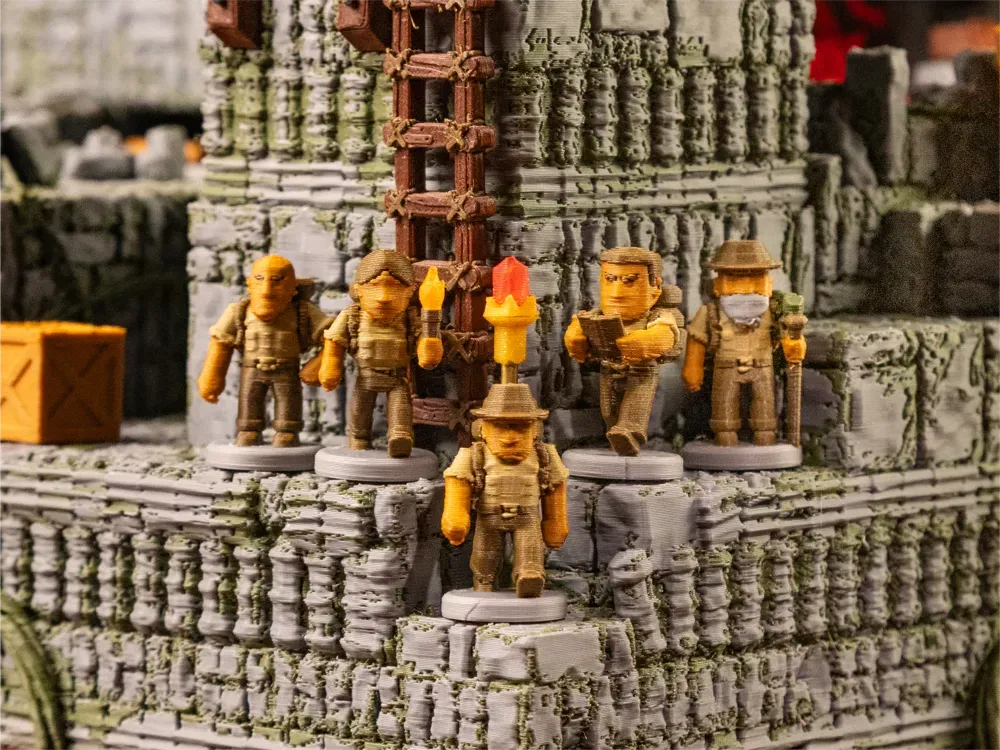
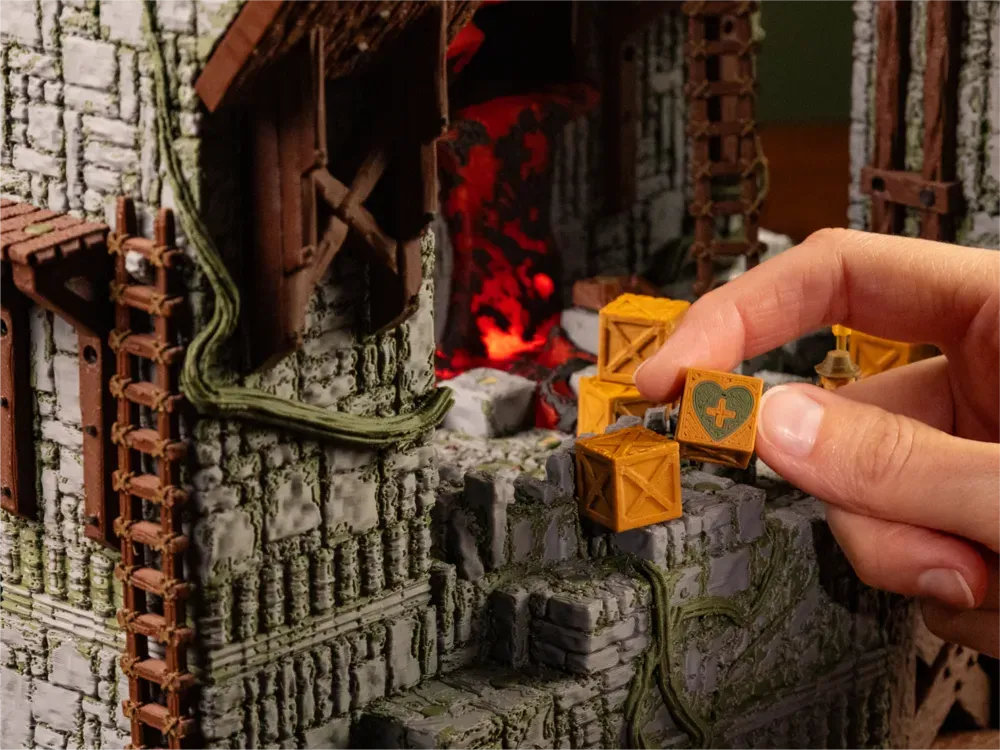
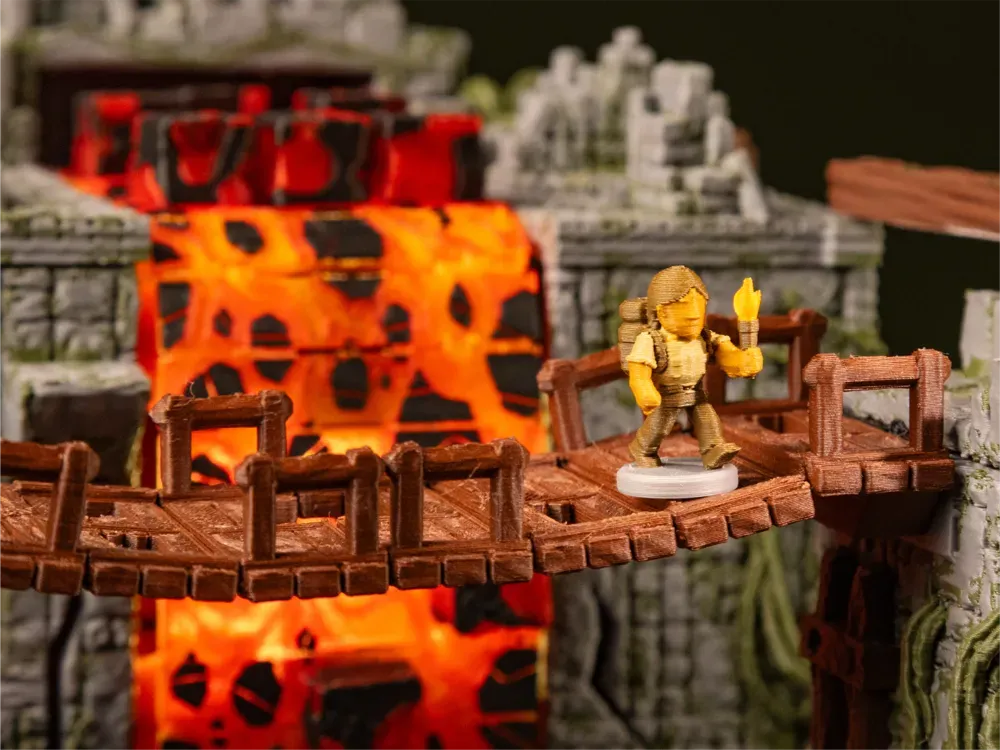
During the creation process, prototype parts were scattered all over his house. His wife felt like they were practically drowning in them.
| Throughout the process, I printed a lot of prototypes and test parts just to confirm how all the components fit together. How many prototype parts were generated during that process? I'm still cleaning up the mess now, trying to get rid of them. They're everywhere. My wife says the same, she feels—and I agree—that the whole house has been flooded with parts from this project.

But that wasn't the hardest part.
| I'm proud of this project because I set myself a very difficult challenge. It was the first time I asked people to pay for something I made, and I felt very uncomfortable about it. I didn't want to take someone's money—even if it was just twelve dollars—and have them feel like they didn't get their money's worth. I hated that feeling.
This sensitivity to the other side of the transaction is Matthew's hallmark. He doesn't create to please algorithms, but because he himself would want to own it. If he decides to charge, the work must be worth the price.However, his most satisfying model is neither Relic Rush nor the Snap Lamp, which raised over $17,000.
| The model I'm most proud of is probably the water gun I made. Simply because it's super fun, and it's something I would have loved as a kid. As far as I know, you absolutely can't buy a similar toy on the market. So I think it's a great example of the magic of 3D printing: you can create something truly cool that you can't buy in stores.
| From a brainstorming and fun perspective, I'm proud of it – it's a bit silly, I had a lot of fun with it myself, and, well, I'm very satisfied with the final result.
| Turning pressure into a tool
Does Matthew pay attention to trends? Does he care what type of models are most downloaded right now?
In short: no.
And the more detailed answer is even more intriguing.
| My motivation for creating doesn't come from how many things I've published. I try to do something different every time. Some commenters seem to expect me to keep releasing more marble run series—more and more. But what excites me the most is always trying something completely new.
He has also published works that went unnoticed. Completely ignored, zero response. "But the design process was still fun."
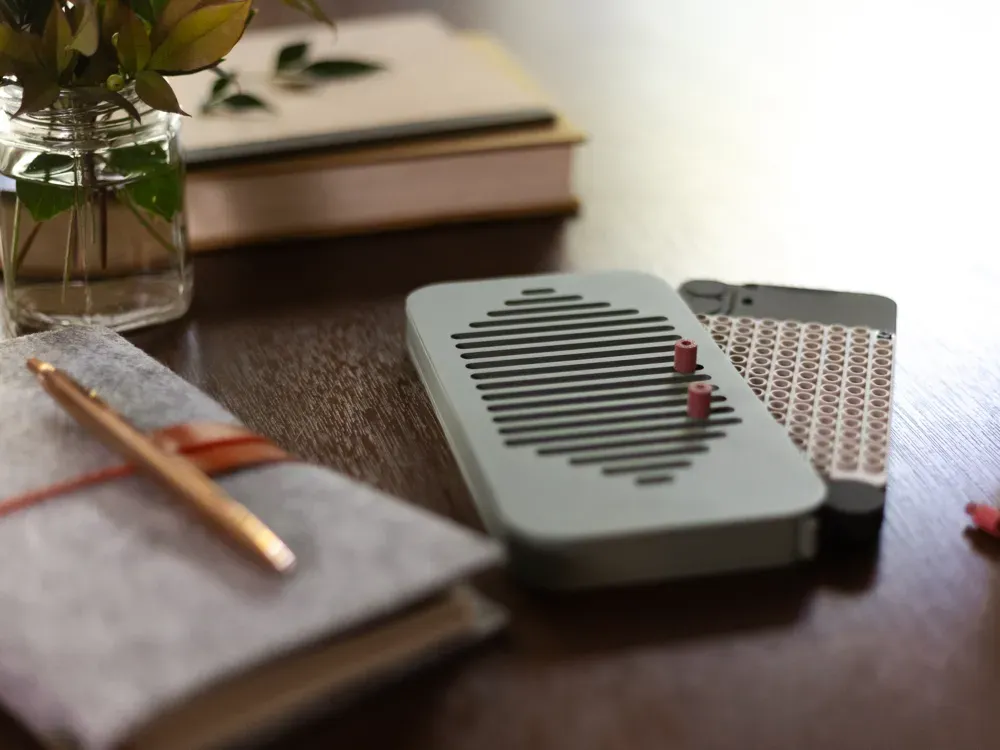
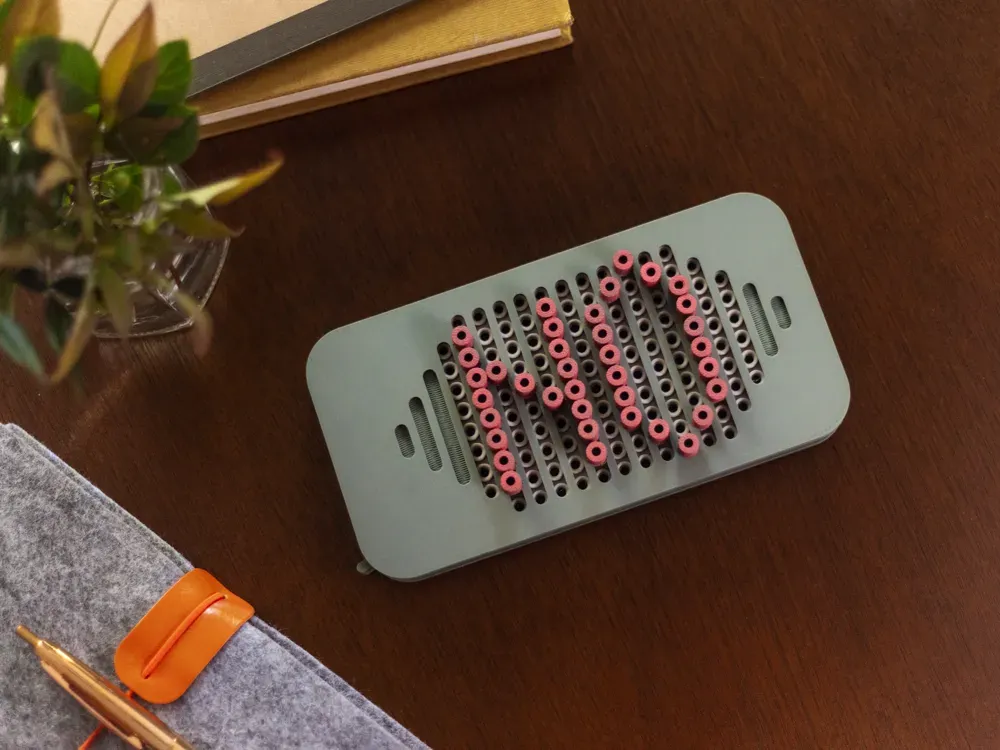
MakerWorld has also provided him with another motivation: contests. And Matthew takes an unconventional approach to these – he actively seeks out "constraints."
| One problem with design or 3D printing is that you "can do almost anything." So, how do you choose what to do? A competition provides the first constraint: the theme. But for me, the second constraint is the most important – the deadline.
Without a deadline, Matthew might tweak a project forever. Small adjustments, minor modifications, round and round.
| With a deadline, I feel like I'm on a sinking ship, and I have to throw things overboard to stay afloat a little longer. I have so many ideas in my head, and then I think – okay, that's not going to make it. How can I do it faster? How can I achieve something else in an equally cool way?
Turning pressure into a creative tool. A classic approach.
But this isn't the only reason Matthew feels at home on MakerWorld. In fact, there's "more" to it…
| The reward system offered by MakerWorld and Maker's Supply has indeed had a very positive impact – both financially and creatively. Because I like to think "backward" from parts when designing, I enjoy using MakerWorld points to redeem and build a physical inventory of parts to integrate into my prints. Additionally, being able to exchange points for filament spools encourages me to try designing larger, more colorful prints – one of my recent models used 23 colors!
| At the same time, since Maker's Supply's electronic parts don't require soldering, it makes it easier for many users to try electronics-related projects for the first time. I hope this can be a starting point to help them learn new things and expand their horizons in making. And as a designer, I can also be confident that users will have a consistent experience, without having to bother searching for parts from different places.
| At the same time, since Maker's Supply's electronic parts don't require soldering, it makes it easier for many users to try electronics-related projects for the first time. I hope this can be a starting point to help them learn new things and expand their horizons in making. And as a designer, I can also be confident that users will have a consistent experience, without having to bother searching for parts from different places.
This platform is not just a publishing platform for his work; it's actively shaping his next creative direction. Few platforms can achieve this.
| No plan, just passion
One of Matthew's earliest projects—even before he knew MakerWorld existed—was a Minecraft sword with LED lights. He made it as a gift for his nephews. Later, he published this work.

Now, every December, he sees photos in the comments. Parents print the photos for their children. The children hold the swords. Both sides are beaming with joy.
| I don't want to sound too sentimental, but it's really great to see. It's so heartwarming to see everyone so excited.
What about the second project?
He designed a headphone charger inspired by classic industrial design – Braun aesthetics. He published this design. One day, he received a photo: an employee at the Braun office in Germany had printed his design and photographed it side-by-side with the original product that inspired his design. And the photo was taken at the office of the company that inspired his design.

| Everything I do draws inspiration from cool things, and then I create my own little piece. But to see that… that was really cool.
Finally, I asked about future plans.
Matthew is cautious; all of this has surprised him. But he had no plan, and still doesn't. And it's this caution that has protected him.
| I'm cautious because this is my hobby, and I really enjoy it. I never thought I'd find something new in my forties that brings me so much joy. I'm not chasing quantity.
Would he do this full-time? Yes, he said so directly.
"That would be a dream come true." But his current job is good, his colleagues are great, and he doesn't want to change anything.
So, it's business as usual. Nights. Weekends. Notebooks full of ideas. And those stunning projects.
| What's going on here…
For years, 3D printing was dominated by those who prided themselves on achieving a perfect first layer. On RepRap forums, Facebook, and Reddit, there were groups dedicated to "first layer porn," where users posted photos or videos of perfectly printed lines.
Then Bambu Lab came along, and it no longer made sense… because the first layer was always perfect anyway.
With the arrival of Bambu Lab, a new generation of users emerged – those who "just" design and print things.
Matthew Kimbrough is one of them.

He's not from the "3D printing geek" circle, but rather possesses a designer's mindset, a graphic artist's methodology, and an attitude of wanting to create cool things – not for the sake of mastering the technology itself.
He did what the older generation didn't…
Perhaps this is the new wave. Not hackers, not technicians.
But people need ideas, lists in notebooks, and a printer that works properly.
All photos by Matthew Kimbrough.
Matthew is cautious; all of this has surprised him. But he had no plan, and still doesn't. And it's this caution that has protected him.
| I'm cautious because this is my hobby, and I really enjoy it. I never thought I'd find something new in my forties that brings me so much joy. I'm not chasing quantity.
Would he do this full-time? Yes, he said so directly.
"That would be a dream come true." But his current job is good, his colleagues are great, and he doesn't want to change anything.
So, it's business as usual. Nights. Weekends. Notebooks full of ideas. And those stunning projects.
| What's going on here…
For years, 3D printing was dominated by those who prided themselves on achieving a perfect first layer. On RepRap forums, Facebook, and Reddit, there were groups dedicated to "first layer porn," where users posted photos or videos of perfectly printed lines.
Then Bambu Lab came along, and it no longer made sense… because the first layer was always perfect anyway.
With the arrival of Bambu Lab, a new generation of users emerged – those who "just" design and print things.
Matthew Kimbrough is one of them.
MaKim: "I've noticed that my cat, Taco, is often involved in my projects. I've also hidden small statues of her in some of the works I've published on MakerWorld (such as Relic Rush, Cyberpunk Dice Tower, Rotating Book Nook)."
He's not from the "3D printing geek" circle, but rather possesses a designer's mindset, a graphic artist's methodology, and an attitude of wanting to create cool things – not for the sake of mastering the technology itself.
He did what the older generation didn't…
Perhaps this is the new wave. Not hackers, not technicians.
But people need ideas, lists in notebooks, and a printer that works properly.
All photos by Matthew Kimbrough.
Learn more about Bambu Lab product information here👈
- Contact Us -
3DMart offers more than just 3D printing; we provide three major services: "3D Printing Service," "3D Scanning Service," and "360° Spatial 3D Scanning Service"!!
Follow our fan pages to stay updated:
Facebook | Instagram | Threads