


【3D Printing】 Student Rocket Team Uses 3D Printing to Manufacture Rocket Parts
How Additive Manufacturing Helps University of California, Irvine (UCI) Engineers Shorten Design Iteration Cycles from Weeks to Hours

Most people still view desktop 3D printers as machines that produce plastic trinkets. But this technology has quietly matured into a serious manufacturing tool—it’s reshaping how engineers design, test, and build hardware in some of the world’s most demanding industries.
And the aerospace sector is at the forefront of this revolution.
Once the exclusive domain of multi-billion dollar contractors, it’s becoming increasingly accessible to smaller teams willing to put in the right workflow. Modern printers are capable of handling engineering-grade polymers, delivering tight dimensional tolerances, and producing parts in hours, not weeks.
This transformation has opened a new path for student engineering teams: instead of waiting for outsourced components or vying for time on shared lab machines, they can now run their own rapid design cycles at their own pace and at significantly lower costs.
The UCI Rocket Project Liquids Team is a compelling example of this paradigm shift in action. It's a group of approximately 30-40 undergraduate engineers from the University of California, Irvine, who design and build liquid-fueled rockets powered by cryogenic methane and liquid oxygen.
This is the same propellant combination that SpaceX and Blue Origin are betting on for their deep-space futures.
Their current vehicle, MOCH4, aims to break the university MethaLOX (methane liquid oxygen) altitude record.
To achieve this, they need to move quickly, test frequently, and control costs. Additive manufacturing—specifically a standardized fleet of Bambu Lab printers—has become central to achieving all three. Here’s how it works in practice...
| UCI Rocket Project Liquids Team
The UCI Rocket Project Liquids Team, while designing and building liquid-fueled rockets, also carries a broader educational mission. The team brings together 30-40 undergraduate engineers, giving them direct ownership over complex, flight-critical systems.
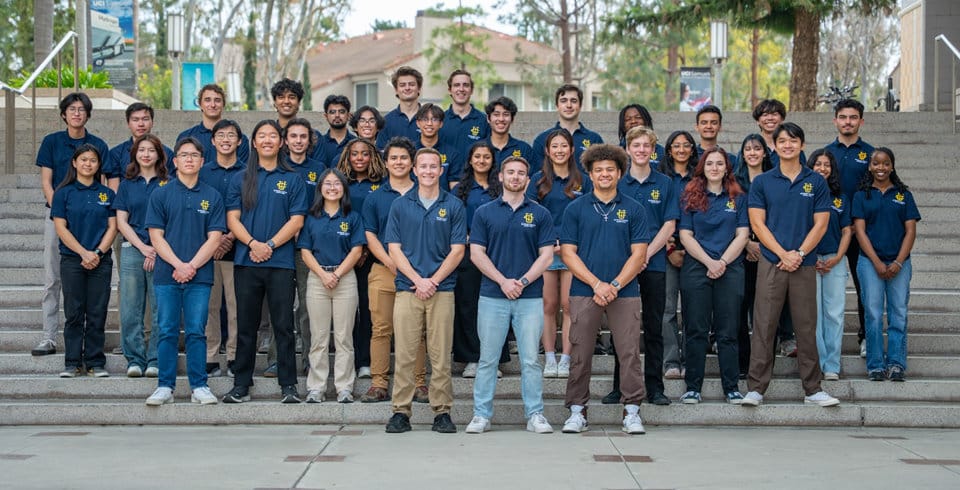
Through hands-on development, members gain experience not only in engineering design and testing but also in leadership, systems thinking, and professional collaboration. The rocket itself is a testament to what a motivated student team can achieve when supported by the right tools, mentorship, and knowledge transfer.
A defining technical challenge for the team is the use of cryogenic liquid methane and liquid oxygen (MethaLOX) propellants. These propellants require extensive research, rigorous testing, and fine-grained system-level integration.
At the same time, they represent an increasingly adopted propulsion architecture in industry for future deep-space missions. MethaLOX enables in-situ resource utilization, including the potential to generate return propellants from Martian resources.
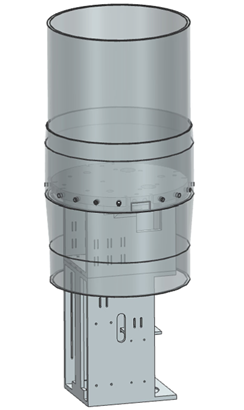
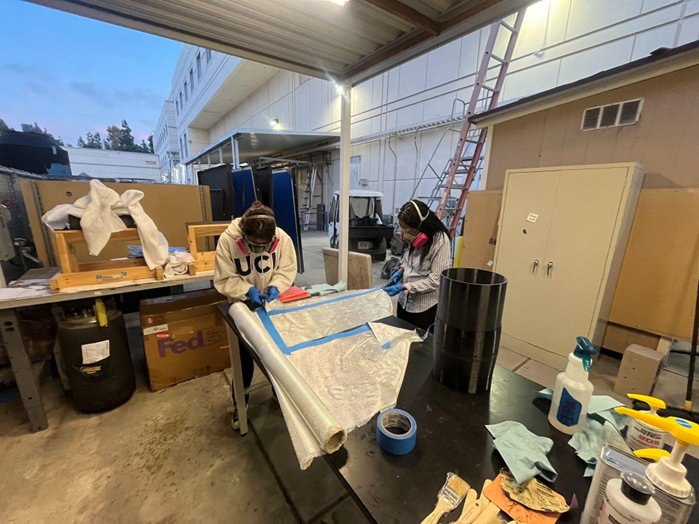
[1] Composite model of the rocket structure and skin designed by students; [2] Students are processing the rocket's fireproof material, with 3D printed skin sections visible.
Companies like SpaceX and Blue Origin have committed to this approach, making the students' experience with MethaLOX systems directly relevant to current industrial practices.
In 2023, the team launched UCI's first liquid rocket, PTR, reaching an altitude of approximately 9,100 feet.
Lessons learned from that project were incorporated into MOCH4, a pressure-fed MethaLOX vehicle designed to challenge the 13,205-foot university MethaLOX altitude record.
As part of the redesign, the team focused on the upper aerodynamic structure and recovery system. Additive manufacturing structures became a core driver, allowing the team to produce fit-check prototypes, flight-relevant brackets, enclosures, jigs, drill guides, cable management hardware, purge molds, and camera housings in-house.
Components that once required weeks of lead time through outsourcing can now be produced in hours, enabling rapid iteration before committing to machined parts.
This workflow is highly compatible with the capabilities of Bambu Lab printers.
The team needs high-speed, reliable printing with engineering-grade materials such as PA-CF, PC, and ASA. These capabilities enable rapid prototyping of upper stringers, bulkhead interfaces, and enclosure cutouts, as well as the manufacturing of durable recovery devices for ground testing and solid rocket maneuvers.
Additionally, the printers support the creation of integrated tools, reducing assembly time and rework.
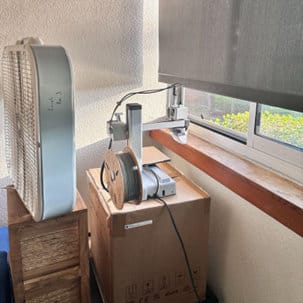
At the time of the case study, the team has access to multiple Bambu Lab systems.
An A1 mini is used for quick, on-demand prototyping, while a P1S supports larger parts and faster iterations. Through a long-standing partnership with MatterHackers, the team also has access to a Bambu X1 for higher volume or specialized printing tasks.
A Bambu Lab officially sponsored H2D printer is also planned for addition to address the team's most significant limitation: restricted campus printer availability and material access.
The decision to standardize on Bambu printers was driven by speed, dimensional accuracy, reliability, and ease of onboarding for new members. Early printers that required significant debugging consumed a disproportionate amount of engineering time. In contrast, Bambu systems allow the team to focus on design, testing, and integration rather than printer maintenance.
| Challenges Before Adopting Bambu Lab Technology
Before integrating Bambu printers into their workflow, the team faced several limitations. Printer access was distributed across personal machines and partner facilities, leading to long queues, inconsistent schedules, and limited material choices.
Print quality was inconsistent, especially on older platforms, which increased rework and slowed down the design cycle for upper aerodynamic structures and avionics hardware.
The team identified an opportunity to centralize production around a reliable, high-speed system that could support same-day fit-checks and functional prints. Shortening iteration times was crucial for maintaining the project's testing and launch schedule.
| Bambu Lab Solution: Workflow Changes and Measurable Benefits
With the adoption of Bambu Lab printers, the team immediately saw a change in iteration speed. Fit and clearance checks that previously took days could now be completed in hours. This accelerated the design-to-test cycle and allowed for rapid optimization of geometries, interfaces, and stiffness.
The expanded material range enabled practical applications of PETG, ASA, PA-CF, and TPU for functional components requiring specific thermal, structural, or damping properties.
Print quality and uptime significantly improved, with more consistent dimensions and surface finishes, reducing post-processing and reprinting. New members could also quickly learn the slicing and printing process, lowering the barrier to contribution and saving engineering time.
As of this writing, the team has no substantial criticisms of the platform and plans to provide further feedback after long-term use of the H2D system, particularly concerning high-temperature polymers and extended prints.
| Results
MOCH4, the team's next-generation liquid methane/liquid oxygen rocket, is designed to be reliable, recoverable, and to set new performance records. To advance quickly while controlling risk, the team uses the solid rocket test vehicle SR-5 as a full-scale flight test platform. SR-5 allows non-MethaLOX dependent subsystems from MOCH4 (such as the upper assembly and avionics skin) to be validated in a real flight environment.
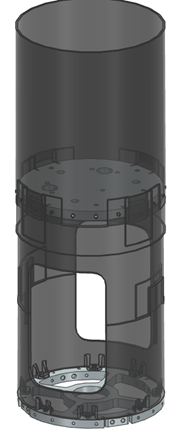
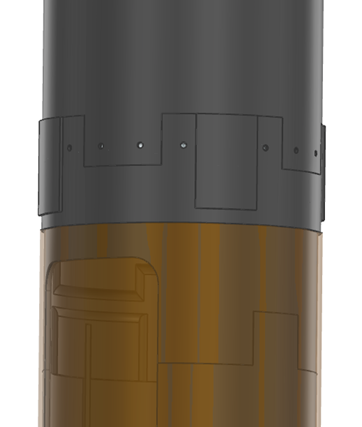
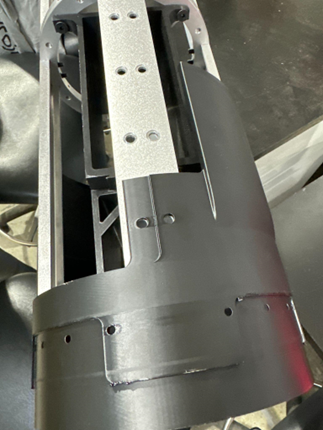
[1] Rocket shell structure designed by the team; [2] Detailed view of the rocket shell structure; [3] 3D printed solid rocket shell, mounted on the aluminum main frame
The entire process is simple and repeatable. The team uses 3D printers to create aircraft-like skins, performs destructive ground recovery tests, and then carries the successful configurations on SR-5 for test flights. This flight data will be used for subsequent design iterations, ultimately finalizing the MOCH4 configuration.
Ground tests include bonding printed skins to composite structures and performing destructive tests with live black powder ejection and parachute deployment.
Once a design passes ground tests, it is flight-tested on the SR-5 to validate in-flight aerodynamics, thermals, and impact loads that are difficult to simulate on a test stand. The team then repeats iterations and conducts multiple flight tests to optimize wall thickness, stringer layout, and insert designs.
The upper and avionics sections require clear RF performance to ensure the proper functioning of cameras, telemetry equipment, and GPS. Traditional carbon fiber composites attenuate RF signals. By printing skins with RF-transparent polymers and adding composite reinforcement where necessary, the research team satisfied structural requirements while ensuring clear signal transmission paths.
Printed skins also provide a great degree of integration freedom. Antenna windows, cable routing, shear pin receptacles, camera mounts, and access hatches can be directly integrated into the geometry without mold changes or secondary operations. Most importantly, the team can go from CAD design to printing, destructive testing, and flight testing within days, which is critical in an annual launch program.
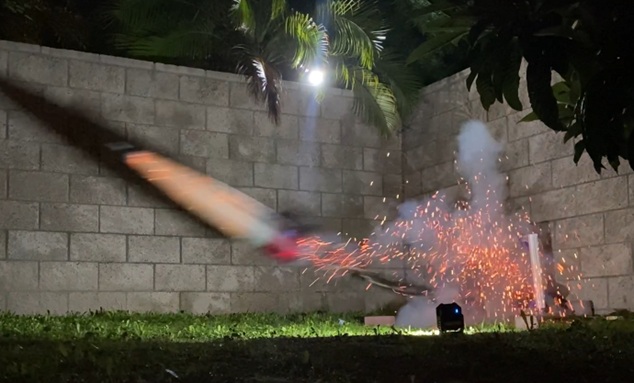
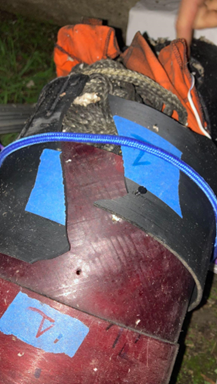
[1] SR-5 rocket undergoing destructive ground testing; [2] 3D printed rocket shell after testing
The ultimate goal is to produce a flight-capable, RF-transparent upper and avionics skin assembly that meets the recovery payload requirements with margin, first validated on SR-5 and then scaled up to MOCH4.
Bringing skin and avionics prototyping in-house has reduced the iteration cycle for most parts from 5-10 days to less than 24 hours. This pace allows for ground testing mid-week, overnight reprints, and SR-5 test flights on weekends.
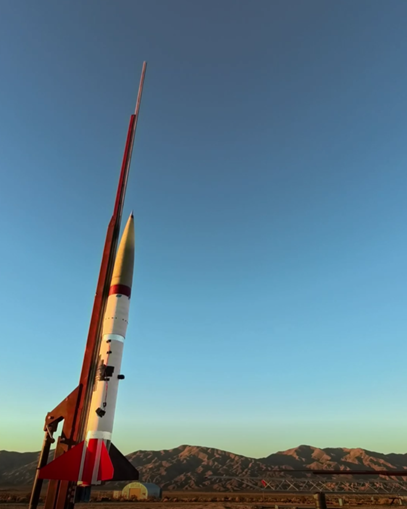
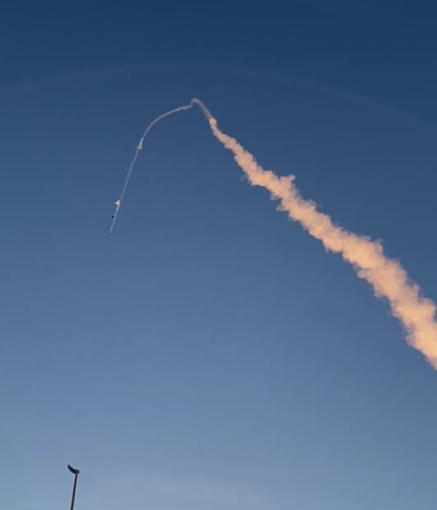
[1] SR-5 test rocket awaiting launch on the launchpad; [2] SR-5 test was highly successful, with a successful launch
The cost per iteration has dramatically decreased.
Similar external printing projects typically cost between $150 and $400 each, while in-house printing costs only about $8 to $25 in materials and machine usage fees. This cost reduction allows for frequent destructive testing under budget constraints.
Compared to traditional home printers, Bambu systems enable more consistent dimensions and cleaner overhangs, which is particularly important for shear pin interfaces, camera hatches, and antenna windows. Faster iteration cycles also allow the team to screen multiple design options and leverage flight data rather than solely relying on analysis to address structural issues, directly reducing risk for MOCH4.
| Looking Ahead
The team plans to expand 3D printing beyond primarily prototyping to manufacturing flight-like hardware. Future work includes developing tougher RF-transparent polymers, fiberglass-reinforced nylon for avionics and skins, hybrid shells with bonded composite ribs, and embedded structures that reduce secondary operations.
With the H2D printer available on campus, the team hopes to accelerate testing through access to higher temperature print profiles, improved long-print monitoring, traceable print logs, and rapid turnaround of hot-swappable test pieces.
3D printing technology is deeply integrated throughout the rocket development lifecycle. It promotes innovation in structural design, shortens manufacturing cycles, reduces costs, and improves performance reliability, helping the team build an efficient, flexible, and robust aerospace manufacturing system.
Article Source
Want to learn more about Bambu Lab 3D printers? Contact us below!
- Contact Us -
3DMart offers more than just 3D printing; we provide three major contract services: "3D printing services," "3D scanning services," and "3D spatial scanning services"!!
Follow our fan pages, don't miss out on new information:
Facebook | Instagram | Threads | LinkedIn